When Legitimate Packages Become Trojan Horses
I’ve been tracking supply chain attacks since the days when most developers thought “dependency confusion” was just poor project organization. What I witnessed with the DependencyDrift campaign in January is something fundamentally different from the crude typosquatting we used to see. This wasn’t some script kiddie hoping you’d mistype “lodash” as “loadsh.” This was surgical precision wrapped in the kind of operational security that would make intelligence agencies proud.
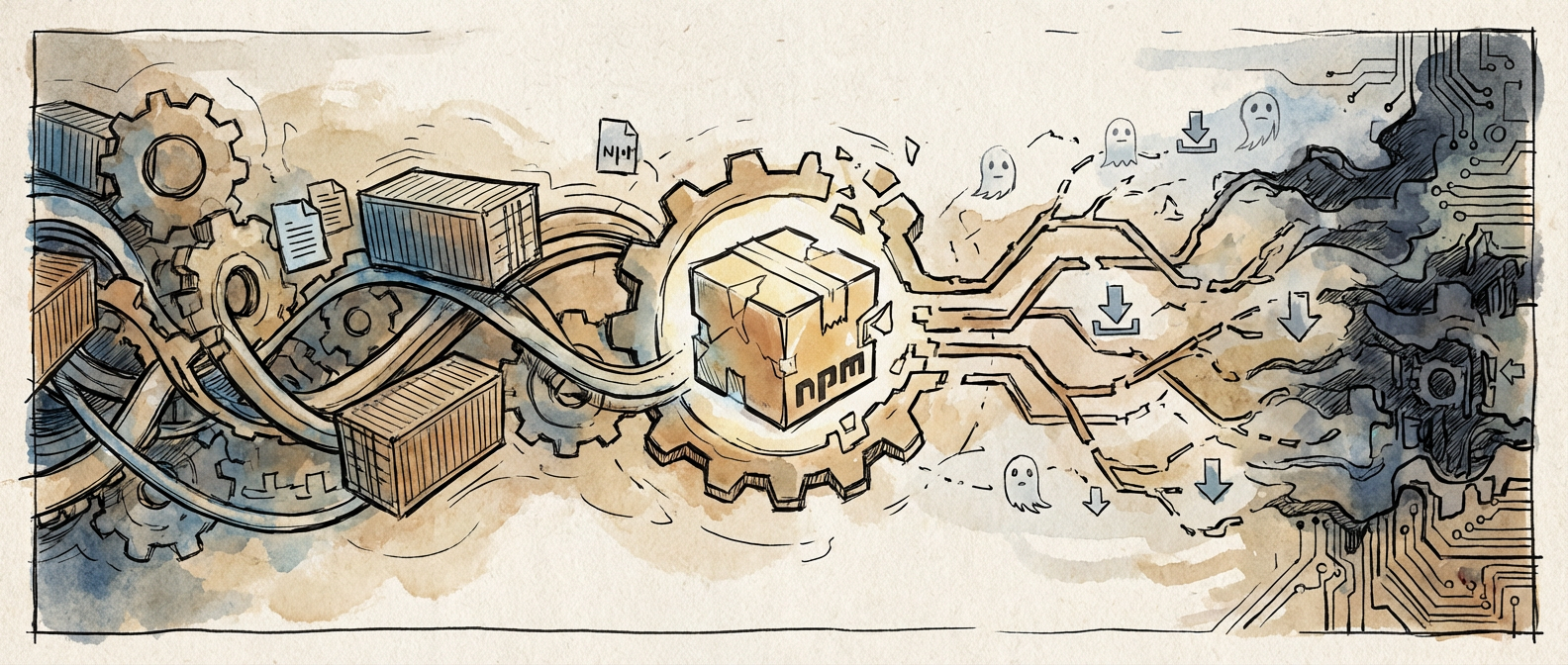
The numbers tell only part of the story. One hundred and twenty-seven compromised NPM packages. Over two million downloads before detection. But here’s what kept me up at night: these packages weren’t obviously malicious. They contained real, working code that developers actually needed. The attackers had done their homework, studying popular libraries, understanding their APIs, and creating functional alternatives that happened to phone home to command and control servers buried in legitimate cloud infrastructure.
This is the maturation of a threat model I’ve been warning about for years. We’re no longer dealing with opportunistic attacks against careless developers. We’re facing adversaries who understand our ecosystem better than most of us do, and they’re using that knowledge to turn our own dependency management systems against us.

The Evolution of Package Repository Infiltration
The GitHub Security Advisory Database recorded something remarkable in the final quarter of 2025: a 340% surge in malicious package uploads, with nearly nine out of ten targeting dependencies for popular frameworks. That’s not random spray-and-pray activity. That’s targeted reconnaissance followed by systematic exploitation of the most critical chokepoints in modern software development.
What makes this particularly insidious is the shift in tactics. The old model involved creating packages with names similar to legitimate ones, hoping developers would make typos during installation. The new model involves creating genuinely useful packages that solve real problems while quietly exfiltrating data or establishing persistence mechanisms. I’ve analyzed dozens of these packages, and the code quality is often superior to many legitimate alternatives.
This evolution mirrors what we’ve seen in other domains of cybersecurity. Attackers have moved from noisy, obvious intrusions to patient, persistent campaigns that prioritize stealth over immediate impact. When your malicious package is actually solving developers’ problems better than the alternatives, detection becomes exponentially more difficult.
The dependency confusion attacks have followed a similar trajectory, with Snyk documenting a 156% year-over-year increase. Python’s PyPI and JavaScript’s NPM remain the primary targets, not because they’re inherently less secure, but because they’re where the most valuable targets congregate. If you want to compromise enterprise software, you go where enterprise developers go to solve their problems.
The Sophistication Arms Race
The most troubling revelation from recent research comes from Sonatype’s analysis of the threat landscape. According to the Sonatype State of Software Supply Chain 2026 report, sixty-seven percent of malicious packages now incorporate legitimate functionality with carefully embedded backdoors. This isn’t about replacing good packages with bad ones anymore. It’s about creating better packages that happen to be compromised.
I’ve reverse-engineered several of these hybrid packages, and the engineering sophistication is genuinely impressive. The malicious components are often dormant until specific conditions are met, making them nearly impossible to detect through static analysis. Some activate only in production environments, others trigger based on specific dependency chains, and the most advanced variants use environmental fingerprinting to avoid execution in sandboxed analysis environments.
Traditional scanning tools struggle with this approach because they’re designed to identify obviously malicious behavior, not subtle variations in otherwise legitimate code. When a package performs its advertised function flawlessly while occasionally making additional network requests that could plausibly be legitimate telemetry, human judgment becomes necessary. At scale, human judgment becomes the bottleneck that attackers are explicitly targeting.
Regulatory Response and Market Reality
The federal government’s response has been characteristically broad and administratively complex. The Executive Order on Software Supply Chain Security now mandates Software Bill of Materials documentation for all federal contractors, affecting more than twelve thousand companies as of March 2026. Having worked with several organizations navigating this compliance landscape, I can report that the implementation reality is as messy as you’d expect.
SBOMs are theoretically excellent tools for supply chain transparency. In practice, they’re only as good as the processes that generate and maintain them. I’ve seen SBOMs that list every dependency three levels deep with cryptographic signatures, and I’ve seen SBOMs that amount to glorified requirements.txt files with timestamps. The regulation doesn’t distinguish between these approaches, creating compliance theater that may provide limited security value.
The broader market has responded with predictable enthusiasm for vendor solutions promising automated SBOM generation and supply chain risk assessment. Some of these tools are genuinely useful, particularly those that integrate with existing CI/CD pipelines and provide actionable intelligence about dependency risks. Others are little more than dependency tree visualizers with security-themed marketing copy.
Building Resilient Dependency Management
After spending considerable time analyzing these evolving threats, I’ve developed a framework that goes beyond the typical “pin your dependencies” advice. Effective supply chain security requires understanding the entire lifecycle of your dependencies, from initial selection through ongoing maintenance and eventual replacement.
The first principle involves dependency archaeology. Before adding any package to your project, investigate its history, maintainer activity, and community engagement. Packages with irregular update patterns, minimal documentation, or maintainers with limited public presence deserve additional scrutiny. This doesn’t mean avoiding all new or niche packages, but it does mean making risk-informed decisions rather than optimizing purely for functionality.
The second principle centers on monitoring and observability. Your dependency management shouldn’t end at installation. Implement monitoring that can detect unexpected behavior from your dependencies, particularly network activity, file system access, or process spawning that doesn’t align with documented functionality. This requires infrastructure investment, but it’s infrastructure that pays dividends beyond security.
The third principle involves redundancy and fallback planning. Critical dependencies should have identified alternatives, preferably maintained by different organizations with different security models. When a package becomes compromised or abandoned, having a migration path already mapped reduces the pressure to make hasty decisions that might introduce new risks.
Supply chain attacks will continue evolving because the underlying incentives haven’t changed. Our software remains as interconnected as ever, our trust models remain largely implicit, and the economic pressures that drive rapid development haven’t diminished. What we can change is how we approach these inherent risks, building systems that fail gracefully when trust inevitably breaks down. The conversation about these evolving threats is just beginning, and I’d be interested in hearing how others are approaching these challenges in their own environments.