Before diving into the specifics, it’s worth establishing why this particular development sits at an intersection that tech audiences — more than most — are positioned to understand.
A Launch That Rewrote the Record Books
Loving a gaming platform and being critical of it are not contradictory positions. The people who care most about hardware launches are usually the ones most willing to point out where things fall short. The Nintendo Switch 2 arrived in March 2025 with enormous expectations, and by almost every commercial measure, it delivered. But the full picture is more complicated than the headline numbers suggest.
The context shapes everything. The evidence here is worth examining carefully. Starting with that context makes the rest land harder.
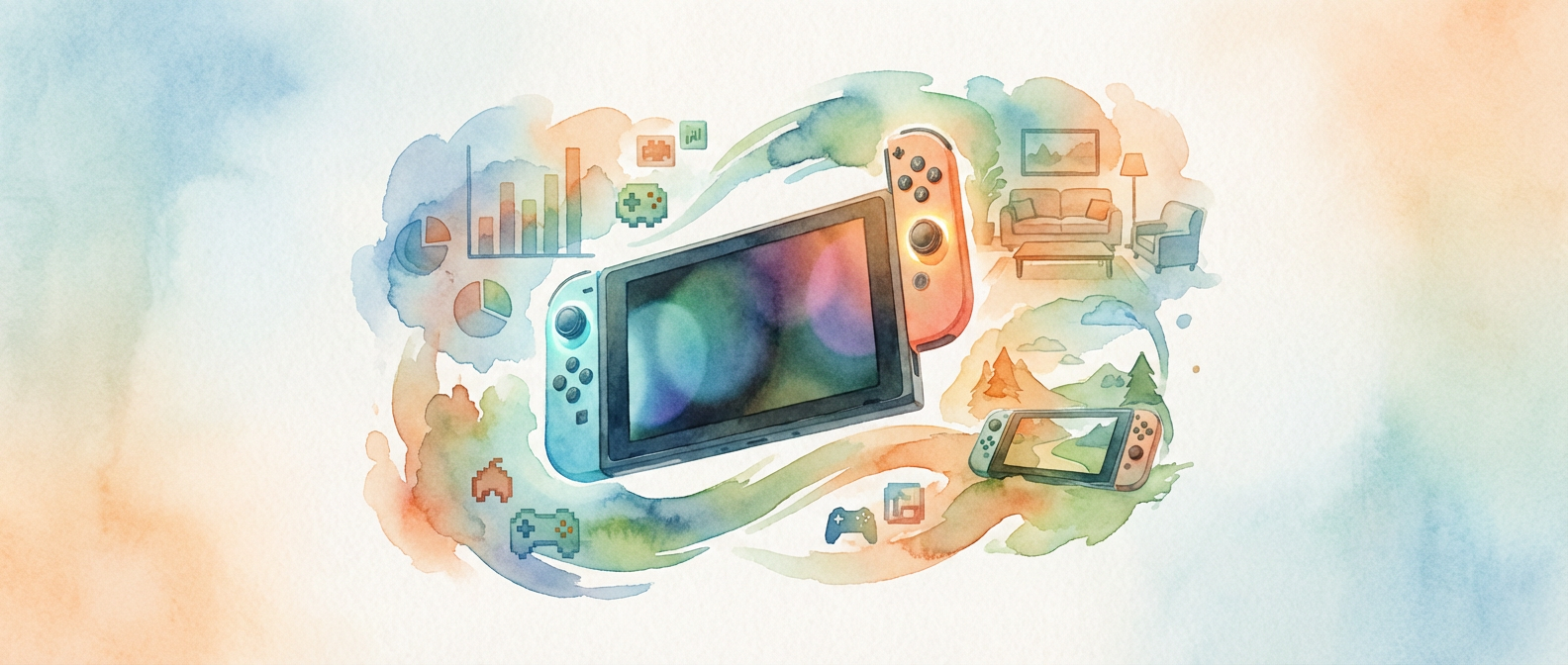
Nintendo confirmed that the Switch 2 moved 3.5 million units within its first 72 hours on sale worldwide. To put that in context, the original Switch sold 2.74 million units in its entire first week, a figure Nintendo disclosed during its April 2017 earnings call. The successor blew past that benchmark before most buyers had even set up their consoles. It’s the kind of opening that silences skeptics and validates years of platform development, but it also raises the stakes for everything that follows.
The launch wasn’t just about hardware. Software momentum matters enormously in the first weeks of a new platform’s life, and Nintendo understood that better than most. The decisions made at launch, from pack-in titles to subscription features, will shape how the Switch 2 is remembered well beyond its first quarter.
Mario Kart World and the Power of a Perfect Pack-In
Pack-in games carry a unique burden. They have to appeal to every type of player, justify the hardware’s price, and generate enough buzz to pull in buyers who were still on the fence. Mario Kart World did all three. According to Nintendo’s Q1 FY2026 earnings report, the title sold 6.2 million copies in its first month, making it the fastest-selling game in the company’s history. That’s a staggering number for any game, let alone one tied to a new platform launch.
What made Mario Kart World click so quickly was its scope. Nintendo positioned it as a genuine open-world evolution of a beloved franchise rather than a simple upgrade. Players responded accordingly. The combination of familiar gameplay with new structural ambition gave longtime fans something fresh without alienating casual players who just wanted to race.
The success of a single title at this scale also has downstream effects. It builds confidence among third-party developers, signals to retailers that the platform has legs, and creates a cultural moment that marketing money alone can’t buy. Nintendo has launched consoles with strong pack-ins before, but the Mario Kart World performance stands apart even by those standards.
Technical Performance and the Third-Party Opportunity
Hardware sales and software records matter, but serious players and developers care about what the machine can actually do. The Switch 2’s GPU performance has been a recurring topic since launch, and the technical community has weighed in with detailed findings. According to a Digital Foundry Switch 2 Technical Analysis, the console’s GPU delivers roughly 3.5 times the graphical power of the original Switch. That leap is substantial enough to change what’s possible in handheld mode.
The clearest demonstration came from mobile ports. Genshin Impact, one of the most demanding games in the free-to-play market, runs at native 1080p and a steady 60 frames per second in handheld mode on Switch 2. On the original hardware, compromises in resolution and frame rate were constant. The new device removes those compromises entirely, which means a huge catalog of games previously considered too demanding for portable play can now arrive without significant concessions.
For developers working in mobile and mid-tier console spaces, this matters a lot. The gap between what Switch 2 can run and what PlayStation or Xbox can run is still real, but it has narrowed enough that porting decisions become far less painful. That should translate into a richer software library over the next two to three years, particularly from studios that previously had to build separate, scaled-down versions of their games for Switch.
For the full picture on hardware capabilities, the Nintendo Switch 2 Official Hardware Specs and Announcements page provides Nintendo’s own documentation on what the system is designed to do, from display technology to connectivity features.
Where the Launch Stumbled: GameChat and the Subscription Debate
No launch is flawless, and the Switch 2’s most visible stumble involved GameChat. The feature, which allows players to communicate via voice and video while gaming, is gated behind a Nintendo Switch Online subscription. That decision generated immediate and sustained backlash. A community poll conducted by Digital Foundry in June 2025 found that 78 percent of respondents objected to the additional cost structure surrounding GameChat. That’s not a small dissenting minority. It’s a clear signal that the value proposition didn’t land the way Nintendo intended.
The criticism is understandable. Voice communication has been a standard, free feature on competing platforms for over a decade. Asking players to pay for online access and then placing a popular social feature inside that paywall feels like a double restriction. Nintendo’s online infrastructure has long drawn scrutiny, and GameChat, despite being technically capable, became a lightning rod for those accumulated frustrations.
Nintendo has historically been slow to adjust subscription and feature pricing once a system is live, which means GameChat’s cost structure may remain a complaint throughout the console’s lifecycle. Whether that affects long-term subscriber numbers or social feature adoption remains to be seen. What’s clear is that the company left goodwill on the table at a moment when it had enormous momentum to spend.
Accessories, Attach Rates, and What the Numbers Predict
Beyond the console itself, the peripheral market around Switch 2 has been remarkable. Circana, the retail analytics firm formerly known as NPD, reported that Switch 2 accessories generated approximately $890 million in revenue during the first six months following launch. That figure represents the fastest peripheral attach rate in Nintendo hardware history. Carrying cases, extra controllers, docking solutions, and screen protectors all moved at volumes that surprised even optimistic retail forecasts.
High accessory attach rates are a reliable indicator of consumer confidence in a platform. People buy peripherals when they believe a system will be part of their lives for years, not months. The spending patterns around Switch 2 suggest buyers are treating this as a long-term investment rather than a casual experiment. That’s exactly the kind of consumer behavior that sustains a platform through its middle and late years when launch excitement fades.
Taken together, the Switch 2’s opening act makes a strong argument that the mobile-console hybrid category it pioneered is not a passing trend. It’s the dominant form factor for a significant segment of the gaming audience, and Nintendo has so far managed to expand that audience with each iteration. The challenges around subscription pricing and feature access are real, but they exist alongside numbers that most console launches would consider impossible. The hybrid era isn’t just continuing. It’s accelerating.
For more on mobile gaming, gacha culture, and where the industry is heading, metatrend.app covers this space with the depth it deserves.
If you work in or around this space, the practical implications are worth mapping against your current tooling and roadmap. Bookmark this for your next architecture review.